


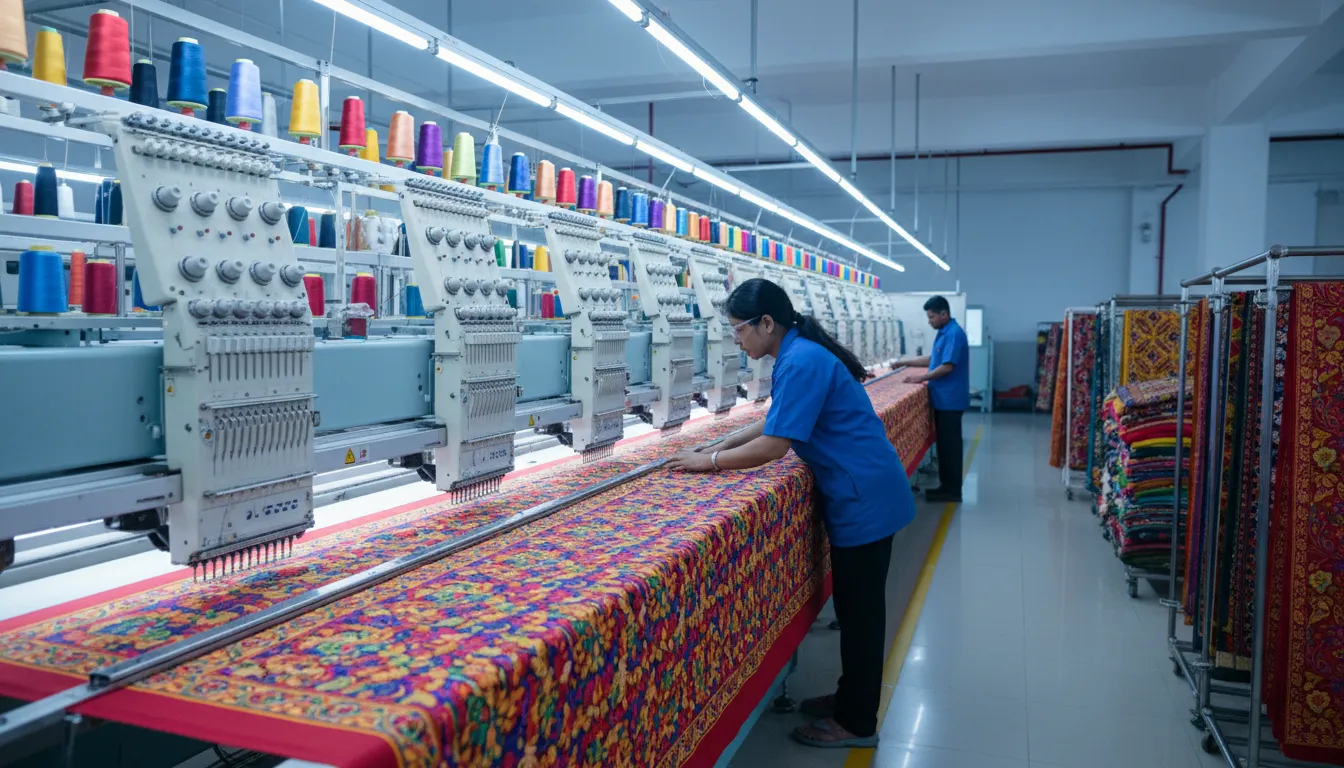
Industrial Embroidery Machines for Textile Manufacturing
The textile and garment industry relies heavily on efficient production technologies to meet growing global demand. Among these technologies, industrial embroidery machines have become an essential tool for textile manufacturers who need to produce high-quality embroidered garments at large scale. From fashion brands to uniform manufacturers, embroidery adds value, style, and uniqueness to textile products.
Modern industrial embroidery machines are designed to deliver speed, precision, and reliability, making them a vital investment for businesses involved in textile production.
The Role of Embroidery in Textile Manufacturing
Embroidery plays a major role in garment decoration and branding. Many clothing products require embroidered logos, patterns, and decorative elements to enhance their appearance and value. High-quality embroidery helps clothing brands create distinctive designs that stand out in the competitive fashion market.
Textile manufacturers use embroidery for a wide range of products, including:
• Fashion garments
• Designer dresses
• Corporate uniforms
• Sportswear and team apparel
• School uniforms
• Promotional clothing
As demand for customized and decorative clothing continues to grow, embroidery production has become an important part of textile manufacturing.
Advantages of Industrial Embroidery Machines
Industrial embroidery machines are built specifically for large-scale production environments. Unlike basic embroidery machines, industrial systems are capable of running continuously for long production hours without compromising stitching quality.
One of the biggest advantages of modern machines is their high-speed performance, often reaching speeds of up to 1500 RPM. This allows textile businesses to complete embroidery orders faster and increase overall production capacity.
In addition to speed, industrial embroidery machines offer several other advantages:
• Consistent stitching quality
• Faster design execution
• Reduced manual effort
• Ability to handle complex embroidery patterns
• Improved production efficiency
These benefits help textile manufacturers maintain productivity while delivering high-quality embroidered garments.
Multi-Needle Technology for Complex Designs
Industrial embroidery machines are typically equipped with multi-needle technology, allowing operators to load multiple thread colors at once. When a design requires color changes, the machine automatically switches to the correct needle without interrupting production.
This automation saves time and ensures accurate embroidery results, especially for complex designs that include multiple colors or decorative elements.
Multi-needle systems are particularly useful for embroidery styles such as:
• Logo embroidery
• Beads embroidery
• Sequin embroidery
• Jardooshi embroidery
• Decorative fashion embroidery
With multi-needle machines, textile manufacturers can produce intricate designs efficiently while maintaining high production speed.
Durability and Reliability in Production
Industrial embroidery machines are engineered with durable machine frames and precision mechanical components. This ensures stable operation even during continuous production cycles.
Textile manufacturers often run embroidery machines for many hours each day. Reliable machines help minimize downtime and prevent production delays. Advanced machine systems also include automatic thread trimming, intelligent thread control, and user-friendly control panels.
These features allow operators to monitor machine performance and adjust embroidery settings easily, ensuring smooth production workflow.
Supporting Business Growth
For textile manufacturers, investing in modern embroidery technology can significantly impact business growth. High-performance embroidery machines enable businesses to increase production output while maintaining consistent product quality.
With faster embroidery production, companies can accept larger orders and deliver them on time. This improves customer satisfaction and helps businesses build strong partnerships with garment brands and clothing manufacturers.
As the textile industry continues to evolve, embroidery technology will remain an important part of garment decoration and branding.
The Future of Industrial Embroidery
The future of embroidery manufacturing lies in advanced machine automation, improved stitching technology, and higher production efficiency. Textile businesses that adopt modern embroidery machines will be better equipped to meet the increasing demand for customized and decorative garments.
Companies like Luck International provide industrial embroidery machines designed to support modern textile manufacturers with reliable, high-speed production solutions.
By investing in advanced machinery, textile businesses can enhance their embroidery capabilities, improve production efficiency, and strengthen their position in the competitive garment industry.

